
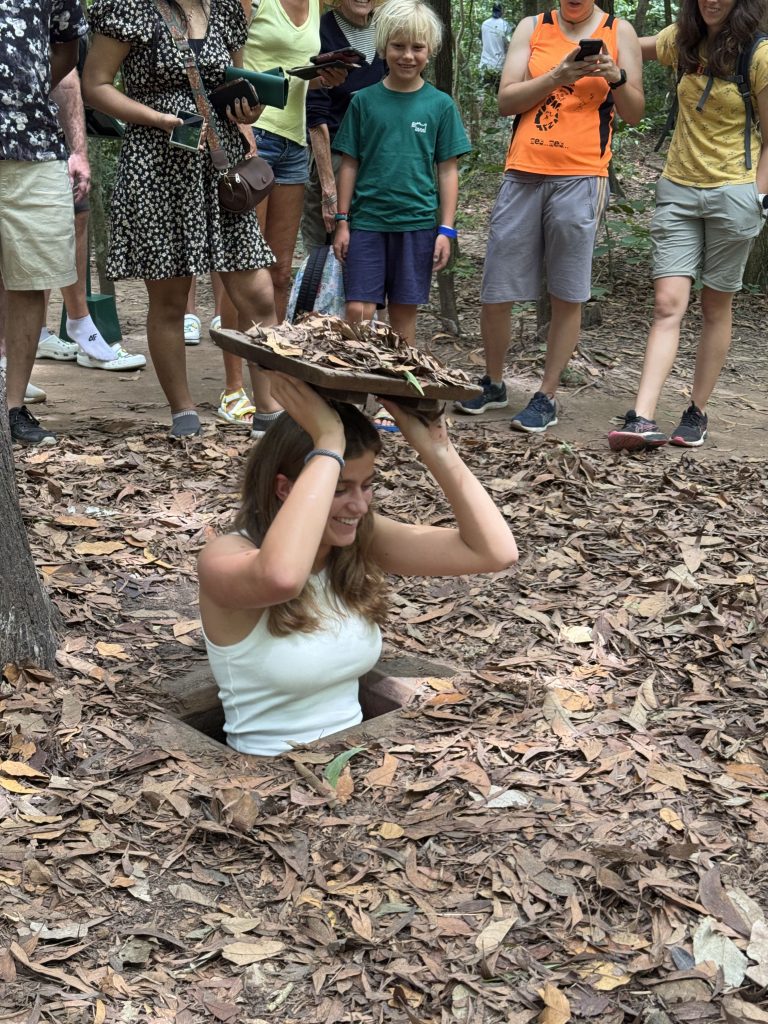
Located just 70 kilometers northwest of Ho Chi Minh City, the Cu Chi Tunnels are one of Vietnam’s most fascinating historical sites. This vast underground network offers visitors a powerful insight into the resilience, ingenuity, and survival spirit of the Vietnamese people during the Vietnam War.
More than just a tourist attraction, Cu Chi is a living reminder of how ordinary people adapted to extraordinary circumstances.
⸻
What Are the Cu Chi Tunnels?
The Cu Chi Tunnels are an extensive system of underground passages stretching over 250 kilometers, originally built and expanded during the resistance wars against French colonial forces and later the American military.
These tunnels were not merely hiding places — they functioned as:
• Living quarters
• Kitchens and meeting rooms
• Field hospitals
• Weapon factories
• Escape routes and trap systems
Despite harsh conditions, thousands of soldiers and villagers lived underground for years.
⸻
Why the Cu Chi Tunnels Are So Important
The tunnels played a crucial role in Vietnam’s wartime strategy. Their narrow design, hidden entrances, and complex layout allowed Vietnamese fighters to:
• Evade advanced military technology
• Launch surprise attacks
• Survive intense bombings
This site symbolizes determination, adaptability, and national pride, making it one of the most meaningful historical landmarks in southern Vietnam.
⸻
What to Expect When Visiting Cu Chi Tunnels
A visit to the Cu Chi Tunnels is both educational and immersive. Most tours include:
1. Documentary Introduction
You’ll start with a short film explaining the historical context and daily life inside the tunnels.
2. Tunnel Exploration
Visitors can crawl through widened sections of the tunnels to experience their tight, dark conditions firsthand.
3. Hidden Traps and Entrances
Guides demonstrate camouflage techniques, trap doors, and defensive mechanisms used during the war.
4. Local War-Era Food
Taste simple foods such as boiled cassava with salt and peanuts, once a staple for tunnel dwellers.
⸻
Ben Dinh vs. Ben Duoc Tunnels: Which One Should You Visit?
• Ben Dinh Tunnels
• More popular and tourist-friendly
• Wider tunnels and easier access
• Ben Duoc Tunnels
• Less crowded, more authentic
• Deeper historical significance
• Recommended for travelers seeking a quieter, more reflective experience
⸻
Best Time to Visit Cu Chi Tunnels
• Best months: December to April (dry season)
• Best time of day: Early morning to avoid crowds and heat
Comfortable clothing and closed-toe shoes are highly recommended.
⸻
Cu Chi Tunnels Tour from Ho Chi Minh City
A half-day tour from Ho Chi Minh City is the most common option. For a richer experience, many travelers choose:
• Private tours with expert guides
• Combined cultural experiences (local villages, countryside stops)
• Small-group tours for deeper storytelling
Choosing the right guide makes a huge difference in understanding the emotional and historical depth of the site.
⸻
Is the Cu Chi Tunnels Experience Worth It?
Absolutely. Visiting the Cu Chi Tunnels is not about thrill-seeking — it’s about understanding Vietnam beyond the surface. It challenges visitors to reflect on human endurance and the cost of war, while deepening appreciation for Vietnamese history and culture.
⸻
Final Thoughts: More Than a Tunnel, a Story of Survival
The Cu Chi Tunnels are not just underground passages; they are stories carved into the earth. For travelers seeking meaning, history, and connection, this site offers an unforgettable journey into Vietnam’s past.
If you want to truly understand Vietnam, Cu Chi is a place you should not miss.


